Industrial fire doors and curtains are tested and certified doorsets and closure systems designed to resist the spread of fire through protected openings, helping maintain fire compartmentation within a building. Fire door systems can provide fire integrity (E), limit radiant heat (EW) and provide thermal insulation (EI₁ or EI₂) for specified resistance periods. A single system can achieve more than one classification, with different performance criteria maintained for different lengths of time.
Tekta provides industrial fire door solutions for controlled and specialist environments, including data centres, advanced manufacturing, gigafactories, pharmaceuticals and cleanrooms, food and beverage facilities and controlled logistics. Our technical specialists help clients identify suitable doorway solutions tailored to each project’s fire performance, compartmentation, access and operational requirements, with support from design and specification through to installation and ongoing maintenance.







Industrial Fire Door Solutions from Tekta
Tekta’s Pyrodor, Traffidor and Sanidor ranges include fire curtains, roller shutters, sectional doors, sliding doors and hinged personnel doors, with certified E, EW and EI options offering up to E240, EW120 and EI120 fire resistance, for a variety of industrial applications.
Our specialists can help identify the most suitable fire door solution for any project based on requirements such as the required fire classification and resistance period, opening dimensions, supporting wall construction, smoke-control requirements, access needs and integration with fire alarm or building-management systems.


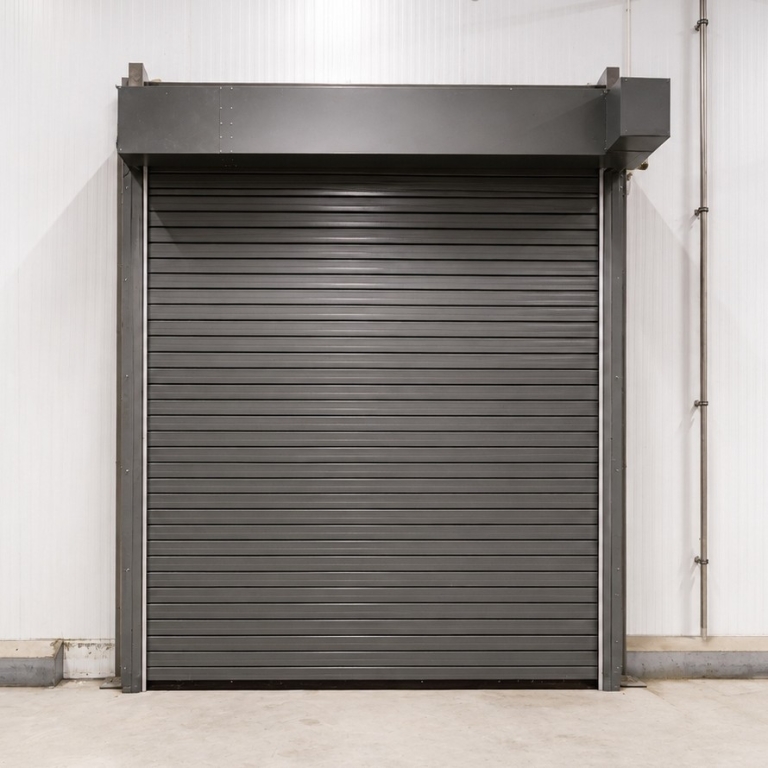
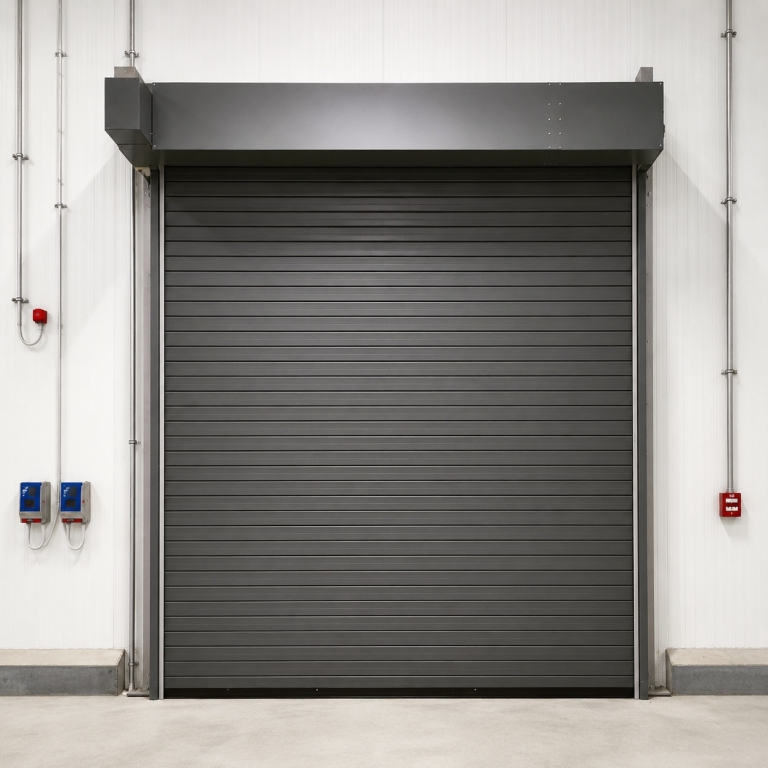
Pyrodor Fireroll EI
Roller shutter door, fire-rated up to EI₁60 for both internal and external openings
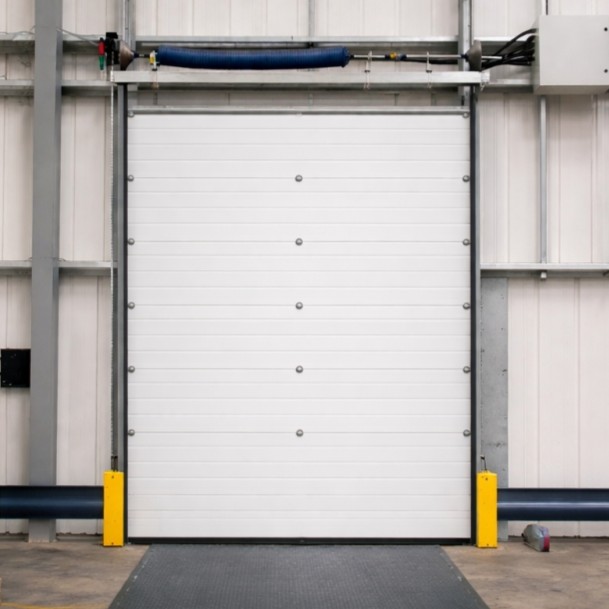
Pyrodor Lift
Sectional door, fire-rated up to EI₁120 for both internal and external applications

Pyrodor Glide
Steel sliding door, fire-rated up to EI₁120 with smoke-proof performance (Sa4/S200)


Featured Fire Door Project
Client: Envision Energy
Project Value: £38,000
Project Location: Sunderland
Project Brief:
Envision Energy required a specialist fire and personnel door package for the development of its new gigafactory at the International Advanced Manufacturing Park (IAMP).
The doors needed to integrate with the facility’s cleanroom package while meeting the stringent fire safety, access and operational requirements of a modern battery manufacturing environment.
Solution:
Working alongside Asgard Hi-Tech Solutions and Wates Group, Tekta supplied and installed:
- 6 Pyrodor Flex EI fire curtains
- 5 Traffidor Pass hinged doors
Together, the doors formed a coordinated package supporting compliant fire compartmentation and secure personnel access throughout the cleanroom environment. The Pyrodor Flex curtains also enabled the required fire protection to be integrated flexibly within the specialist cleanroom layout.
Careful coordination with the wider project team ensured installation remained aligned with the cleanroom programme and the wider construction schedule, supporting the delivery of a high-specification battery manufacturing facility.
Industrial Fire Doors FAQs
What should be considered when specifying an industrial fire door?
An industrial fire door should be selected against the building’s fire strategy and the required performance of the opening. Key considerations include the required fire classification and resistance period, opening dimensions, supporting wall construction, internal or external location, smoke-control requirements, access needs and frequency of use.
Any requirements for automatic closing, fire-alarm integration, access control or wider building-management systems should also be considered as part of the complete doorset or closure specification.
What do E, EW and EI fire door ratings mean?
E, EW and EI describe different types of fire-resistance performance. E relates to fire integrity, EW combines integrity with control of radiant heat, while EI combines integrity with thermal insulation.
The number following the classification indicates the period of fire resistance in minutes. For example, EI120 denotes a system tested to provide integrity and insulation for up to 120 minutes.
What is the difference between a fire door, fire shutter and fire curtain?
Fire doors, shutters and curtains can all protect openings within fire compartments, but use different forms of construction and operation.
Hinged, sliding and sectional fire doors use rigid door leaves or panels; fire shutters typically use steel laths that roll above the opening; and fire curtains use flexible fire-resistant fabric that deploys when required. The most appropriate system depends on the opening, required fire performance, available space and operational requirements.
Can industrial fire doors be installed in different wall constructions?
Yes, but the fire door must have suitable test evidence or certification for the supporting wall construction in which it will be installed. This applies to both standard wall constructions and non-standard systems, including composite panel walls such as Paroc and Eurobond, as the surrounding construction can affect the performance of the complete fire-rated assembly.
Tekta’s Traffidor Pass is certified for installation within both Paroc and Eurobond panel systems, providing greater specification flexibility for projects using these specialist wall constructions.
Can industrial fire doors be used in cleanrooms and controlled environments?
Yes. Fire-rated doors can be used in cleanrooms and other controlled environments where fire protection must be combined with requirements such as hygiene, airtightness, insulation or secure personnel access.
The complete doorset should be selected to meet both the required fire classification and the environmental performance of the opening. Tekta’s Traffidor Pass, for example, is available with fire ratings up to EI120 alongside airtightness, insulation, hygienic finishes and security options.
Can fire doors, shutters and curtains integrate with a fire alarm system?
Yes. Selected fire doors, shutters and curtains can be configured to respond automatically to a building’s fire detection or alarm system.
Depending on the system, this may include automatic closure following fire-alarm activation, smoke or heat detection and integration with wider building-management controls. The required activation and fail-safe arrangement should be established as part of the fire-door specification.
Tekta’s Pyrodor Flex EI can automatically close following activation from a fire alarm, smoke detector or heat sensor. Tekta’s fire roller shutters, like the Pyrodor Fire Roll, can also be integrated with fire-alarm and building-management systems, depending on the selected system and controls.
What information does Tekta need to recommend an industrial fire door?
Tekta will typically need the required fire classification and resistance period, opening dimensions, supporting wall construction and intended application. The project fire strategy, door schedules and details of any smoke-control, access, security or operational requirements will also help identify an appropriate solution.
Information about fire-alarm, access-control or building-management system integration may also be required for automatically operated doors, shutters or curtains.
Do industrial fire doors require planned inspection and servicing?
Yes. Industrial fire doors and other fire-resisting closures require ongoing inspection and maintenance to help ensure they remain safe, operational and capable of performing as intended.
The appropriate inspection and maintenance requirements will depend on the door or closure type, its use and the relevant fire-safety requirements for the premises. The Door & Hardware Federation (DHF) provides further guidance on maintenance responsibilities for fire-resisting and industrial doors.
Tekta provides fire door servicing and planned maintenance services. Learn more about Tekta’s industrial door servicing.