Data Centre Door Requirements

0 min read

Internal and External Door Considerations for UK Data Centres
When designing or upgrading a data centre in the UK, door selection may not be the first element that comes to mind but it plays a critical role in security, environmental control, safety, and operational efficiency. Both internal and external doors must meet stringent requirements that align with industry standards, regulatory obligations, and the unique demands of high-availability environments.
External Doors: Security, Compliance, and Durability
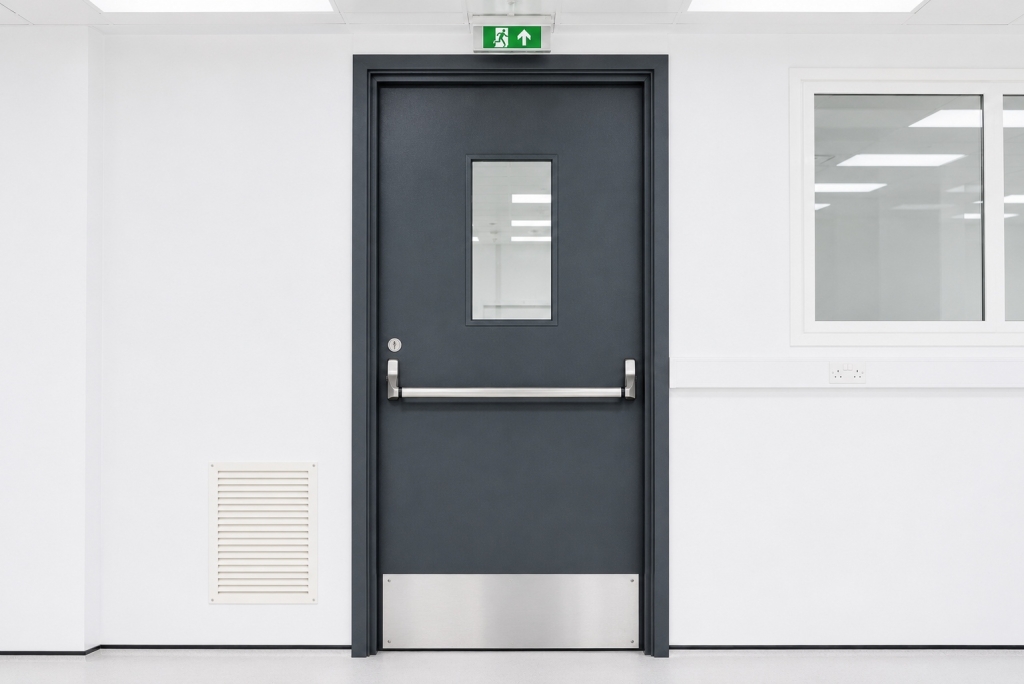
External doors serve as the first physical barrier protecting sensitive infrastructure. In the UK, data centres must follow ISO 27001 guidelines for physical security, which emphasise controlled access and robust perimeter protection. As a result, doors should be constructed from reinforced materials, often steel, and paired with high-security hardware such as multi-point locking systems and access controls, typically integrating with card readers, biometrics, or even mantrap vestibules.
Weather resilience is another key factor. The UK’s variable climate means external doors must provide excellent insulation and be resistant to corrosion, wind loading, and water ingress. This is especially vital in facilities located in coastal or industrial areas. Selecting doors with the appropriate fire rating is equally important, ensuring compliance with UK building regulations and protecting escape routes without compromising security.
Internal Doors: Environmental Control and Workflow Efficiency
Inside the facility, doors contribute heavily to environmental stability and energy efficiency. Maintaining strict temperature and humidity levels is essential for equipment health, so internal doors, particularly those leading to server halls, should offer strong seals to minimise air leakage. This supports containment strategies, whether hot-aisle, cold-aisle, or full-room solutions.
Fire-rated internal doors are crucial for compartmentation, slowing the spread of fire and safeguarding evacuation routes. Many data centres install fire-door systems with automatic closers and integrated sensors that link to the building management system (BMS). Acoustic performance is also a factor, especially in areas housing generators, UPS systems, or heavy-duty cooling equipment.
Doors should also support efficient workflows. This includes considering door swing direction, automation for hands-free access, and compatibility with rack-movement paths. Facilities that operate 24/7 benefit from automated and sensor-driven internal doors that balance security with ease of movement for authorised personnel.
In the UK data centre sector, where uptime, compliance, and security are paramount, door selection is far more than a structural afterthought. By choosing doors that balance security, environmental control, regulatory compliance, and operational practicality, operators can strengthen their physical infrastructure and support long-term resilience.
MORE FROM TEKTA
- Emergency Escape & Panic Door Hardware: BS EN 179, BS EN 1125 and BS EN 13637 Explained
 What is the difference between BS EN 179, BS EN 1125 and BS EN 13637, and which standard applies to your escape door specification? Emergency escape and panic door hardware must allow building occupants to exit quickly and safely in an emergency, without requiring a key, code or specialist knowledge. For architects, specifiers and contractors,… Read more: Emergency Escape & Panic Door Hardware: BS EN 179, BS EN 1125 and BS EN 13637 Explained
- Introducing Modus
 Door specification is complex. Multiple requirements, hundreds of decisions and dependencies between door performance, operation and ironmongery can make producing a comprehensive door schedule challenging. Modus has been developed to bring structure, clarity and confidence to that process. We’re pleased to announce the launch of Modus, the specification portal for the complete door process. Modus… Read more: Introducing Modus
- We’re exhibiting at cold chain live
 Tekta is excited to be exhibiting at Cold Chain Live 2026, taking place on 13–14 October at Telford International Centre. As the flagship event for the UK’s temperature-controlled supply chain, Cold Chain Live brings together more than 400 industry professionals, including cold storage operators, logistics specialists, manufacturers and suppliers. This year’s theme, The Future of… Read more: We’re exhibiting at cold chain live
- UK made cleanroom door
 In pharmaceutical manufacturing, laboratories and cleanrooms, maintaining hygiene, controlling airflow and keeping operations moving efficiently are critical. Tekta’s new UK-made Rapidor Pharma high-speed door has been developed specifically for these demanding environments, combining rapid operation with hygienic construction and excellent air-permeability performance. Designed for cleanrooms, pharmaceutical facilities, laboratories and other controlled environments, the Rapidor Pharma… Read more: UK made cleanroom door