Moisture control in dry-rooms

0 min read

Dry-rooms! When it comes to the Battery Manufacturing industry, dry-rooms are a critical part of the infrastructure. The battery industry is in a period of rapid and sustained growth. As with all rapid growth, some growing pains are inevitable!
After 2 decades of serving the cleanroom sector, Tekta have been invited to work on the design and delivery of several Battery Manufacturing and dry-room projects. Learning from over 15gwh of production capacity, some unique doorway challenges have been discovered. In this article, we aim to tackle one of these challenges.
Air & Moisture Control in Dry-rooms
Dry-rooms require strict control over air quality and moisture levels. With required dew point (DP) levels reaching as low at -70°C, companies make vast investments into dehumidifying equipment (DHU) to achieve the correct air quality. However, aside from this equipment, it’s also vitally important for dry-rooms to have a completely air-tight external envelope in which to contain the conditioned air.
Doorways present a major challenge in this requirement as they are one of the prime sources of air leakage into the dry-room environment.
Air leakage is also referred to as “Air Permeability.” This term refers to the volume of air that is able to pass through any material, or product, within a given period of time. The amount of air that is able to pass through a doorway, into a dry-room can be the difference between a dry-room success, and a dry-room failure!
In some of the facilities that Tekta has inspected, doors have been installed which have no air permeability testing at all. This means that air leakage is effectively uncontrolled. In such situations, its entirely possible that the rate of air leakage into the dry-room will make the DHUs job of maintaining the required dew point unachievable.
When it comes to Air Permeability through doorways, there’s two main standards to be aware of:
- BS EN 12426 is the Air Permeability Classification for Industrial doors (for example roller shutters and high-speed doors).
- BS EN 12207 is the Classification for windows and doors. This classification is applicable to hinged and sliding doors and works on the same principle as the previous standard, with slightly different testing procedures.
The higher the Air Permeability class achieved, the lower the leakage of unconditioned air into the dry-room. (You can learn more about Air Permeability here.)
For dry-room applications, it is recommend to select Class 5 under BS EN 12426 and Class 4 under BS EN 12207 to avoid dry-room failure. It is also noteworthy that it’s not mandatory for doors to have an air Permeability rating in order to achieve a CE marking, so be sure to check exactly what standards doors comply with when selecting them.
In addition to preventing dry-room failure, air control has another role to play. That role is efficiency and sustainability. Correct doorways with a suitable Air Permeability rating will minimise unconditioned air entering the dry-room, meaning that dehumidifying equipment is not under such stress to maintain the required dew point. This allows the equipment to operate more efficiently, reducing running costs, reducing wear & tear, and increasing the life-span of the equipment.
Doorways in dry-room applications present a series of challenges, to varying degrees of complexity. The Tekta team are experienced in doorway design and happy to help. Contact us here if you have any questions on this topic.
MORE FROM TEKTA
- Tekta are taking on Snowdon
 At Tekta UK, we’re used to delivering performance where it matters. This time, we’re putting that mindset to the test, climbing Snowdon to support Rowans Hospice. Snowdon isn’t an easy climb. It’s tough, unpredictable, and demands resilience, all things we understand. As a high-performance doorway provider, we build solutions that are made to perform under… Read more: Tekta are taking on Snowdon
 - Quiz Night
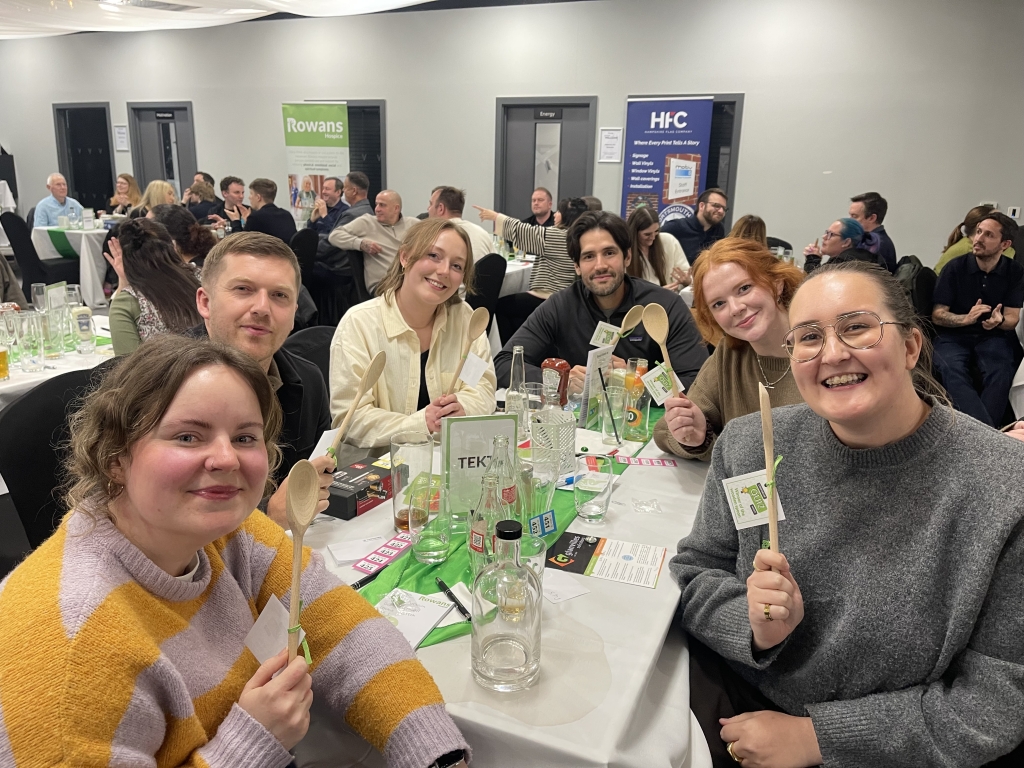 Tekta Takes on the Rowans Hospice Corporate Quiz Night Recently, six members of the Tekta team swapped doors and spreadsheets for trivia questions and answer sheets as we attended the Rowans Hospice Corporate Quiz Night at the Village Hotel Portsmouth. The evening brought together local businesses, supporters and friends of the hospice for a night… Read more: Quiz Night
 - Land’s End to John O’Groats
 Tekta’s First Charity Challenge: Walking the Distance Together At Tekta, teamwork doesn’t stop when the working day ends. This February, our team came together to take on our first charity challenge of the year, walking the distance from Land’s End to John O’Groats, all in support of our charity partner, Rowans Hospice. For those who… Read more: Land’s End to John O’Groats
 - Team Tekta Day
 Coming Together at Chevron House: Celebrating Our Team and a Strong Start to the Year A week ago, we brought together our Central Hub team and Fleet of Engineers at our new Chevron House for a special day of connection, celebration and reflection. After a blazing start to Q1, it felt like the perfect moment… Read more: Team Tekta Day